

Hara Hachi Bu: The 80% Rule from Japan’s Longevity Islands
I was reading about Okinawa the other day—those islands south of mainland Japan where people routinely live past 100—and kept seeing the same phrase pop up. “Hara hachi bu.” Stomach eight parts full. Eat until you’re 80% full, then stop.
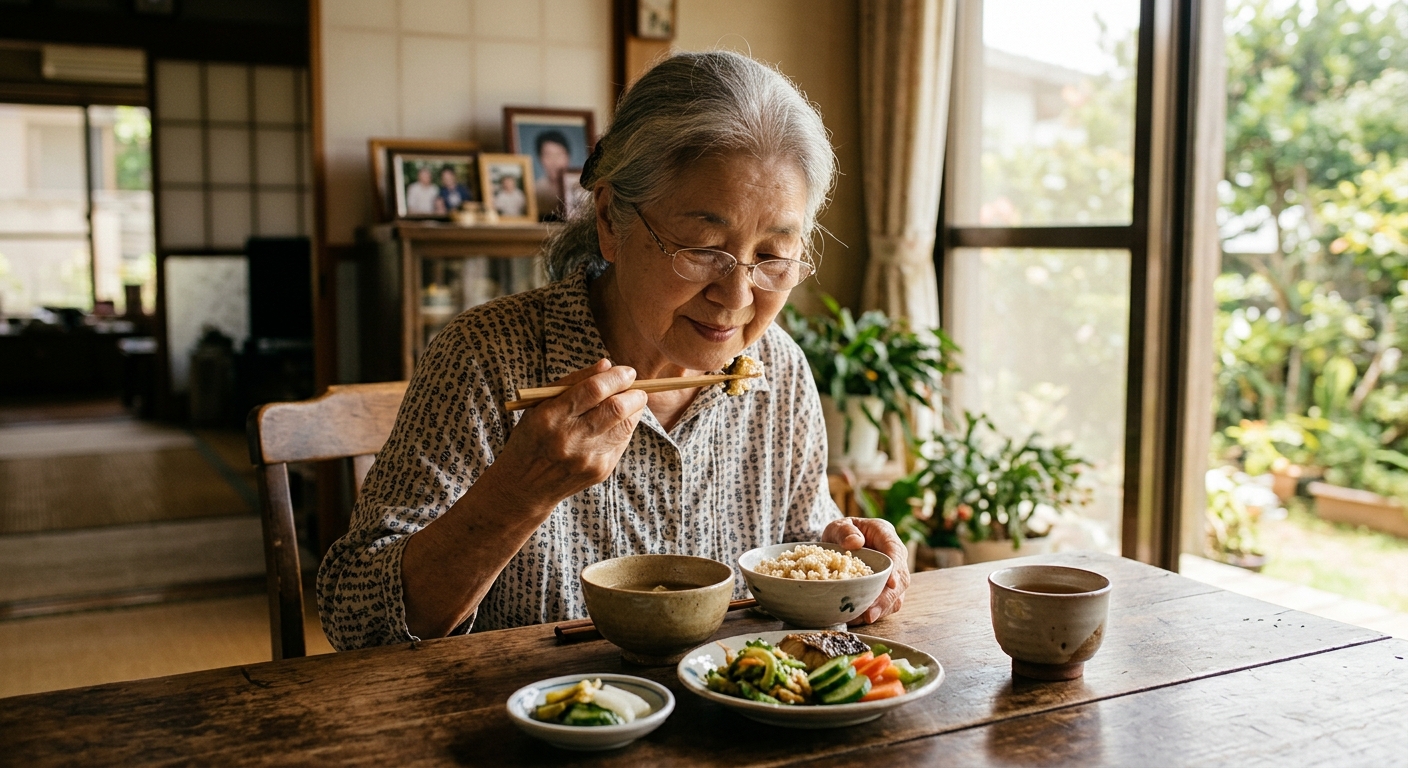
It’s not about leaving food behind or wasting anything. Japanese culture values “mottainai” too deeply for that. Hara Hachi Bu is about knowing when to stop before you hit that stuffed, sluggish feeling. You serve appropriate portions, eat slowly and mindfully, and recognize the moment when you’re satisfied but not heavy. The brain takes 20 minutes to register fullness, so stopping at 80% means you end up perfectly content—not hungry, not bursting, just right.

Research from the Okinawa Centenarian Study links this practice to lower obesity rates and longer life. But what strikes me are the immediate benefits. Less weight carried means less strain on your back and joints. You feel lighter when you walk. You don’t get that post-meal drowsiness. It’s moderation in action—knowing your body’s signals and respecting them. While many of us were taught to eat until we’re full, they were taught to eat until they’re no longer hungry. I’m starting to think there’s wisdom in that pause—that small space between satisfied and stuffed—where longevity quietly begins.


You May Also Like
Washoku: Why Japan’s Young Generation is Rediscovering Traditional Food