-
Two Cows, Two Stories: What a Decade-Old Souvenir Taught Me About Japan
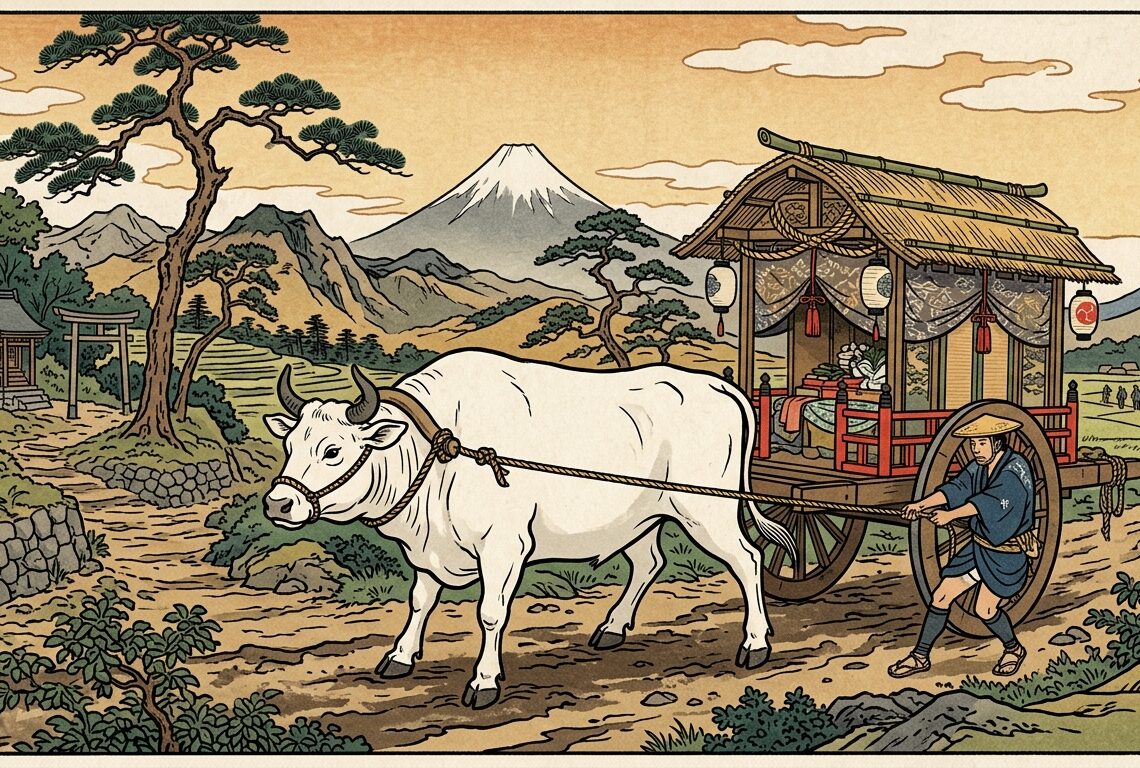
The white ox—blessed at Dazaifu Tenmangu shrine I was digging through a box of old travel mementos the other day when I found them again—two small cow figurines I bought in Japan over a decade ago. One white, one black. At the time, I didn’t think much about them beyond “these look nice.” But finding them again made me curious. Why cows? Why these two? So I started digging. The white one, I now know, came from Dazaifu Tenmangu—a shrine in Fukuoka I’d visited on that trip. It’s a sacred place, famous for its ox statues scattered throughout the grounds. The legend says an ox stopped pulling a funeral cart…
-
Hara Hachi Bu: The 80% Rule from Japan’s Longevity Islands
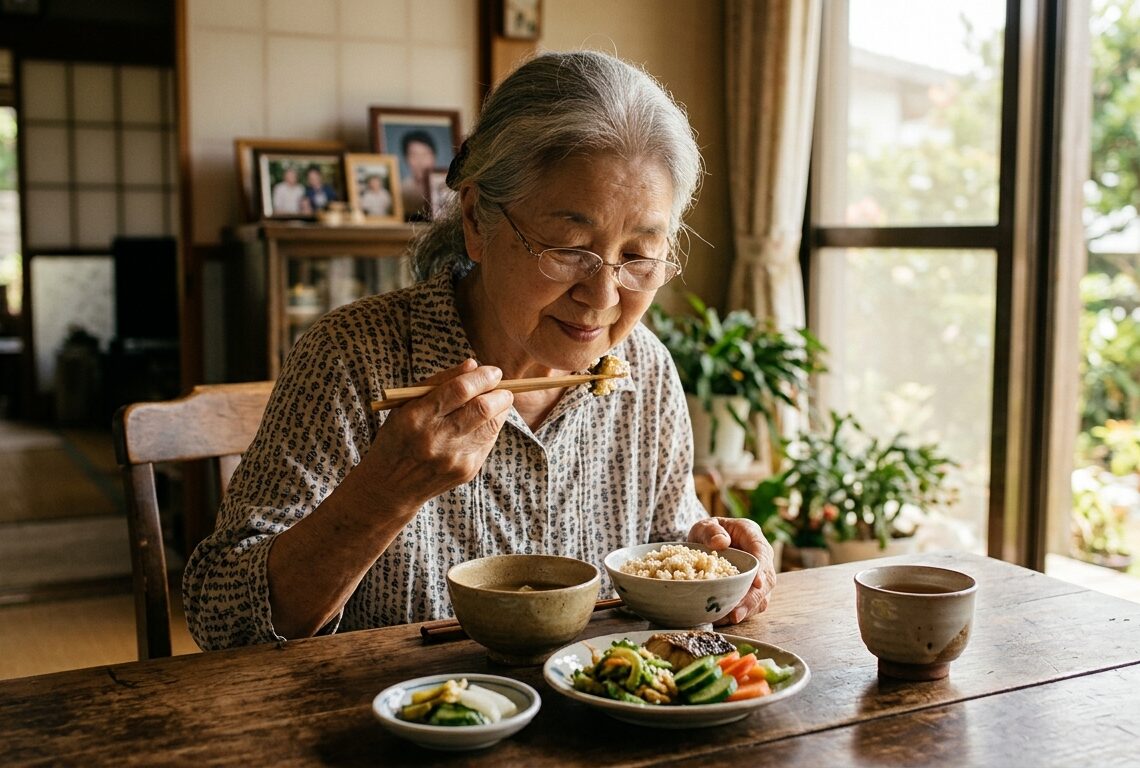
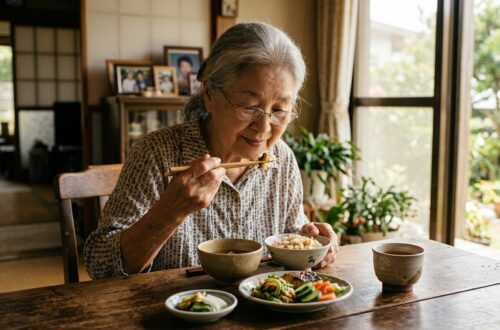
I was reading about Okinawa the other day—those islands south of mainland Japan where people routinely live past 100—and kept seeing the same phrase pop up. “Hara hachi bu.” Stomach eight parts full. Eat until you’re 80% full, then stop. It’s not about leaving food behind or wasting anything. Japanese culture values “mottainai” too deeply for that. Hara Hachi Bu is about knowing when to stop before you hit that stuffed, sluggish feeling. You serve appropriate portions, eat slowly and mindfully, and recognize the moment when you’re satisfied but not heavy. The brain takes 20 minutes to register fullness, so stopping at 80% means you end up perfectly content—not hungry,…
-
Washoku: Why Japan’s Young Generation is Rediscovering Traditional Food
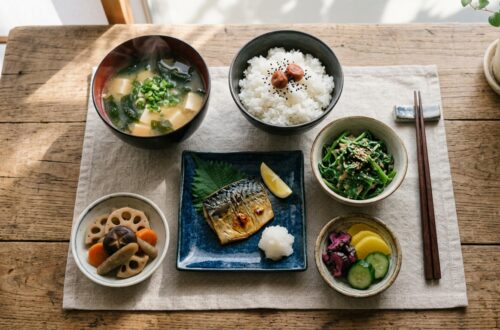
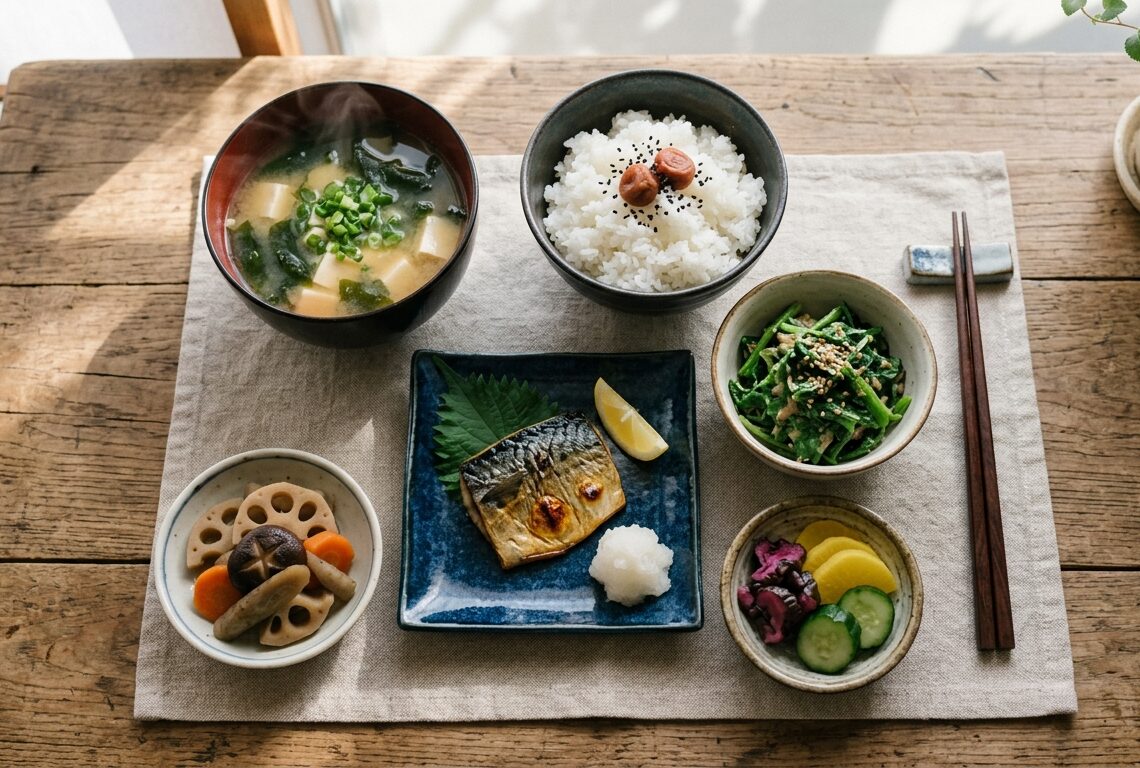
I was browsing a Japanese cookbook in a bookstore last week, admiring the beautiful photography, when something struck me. These intricate dishes—following the “one soup, three sides” structure, presented on seasonal tableware—felt completely foreign to me. Not in a bad way, but in a way that made me realize how little I knew about a cuisine I’d only experienced in restaurants. In 2013, UNESCO recognized Washoku—Japan’s traditional dietary culture—as an Intangible Cultural Heritage. It emphasizes fresh, seasonal ingredients at their peak (shun), nutritional balance, and artistic presentation. The “Wa” in Washoku means harmony—promoting bonds among family and community through shared meals. But here’s the paradox: while the world celebrates Washoku,…
-
The New Traditionalists
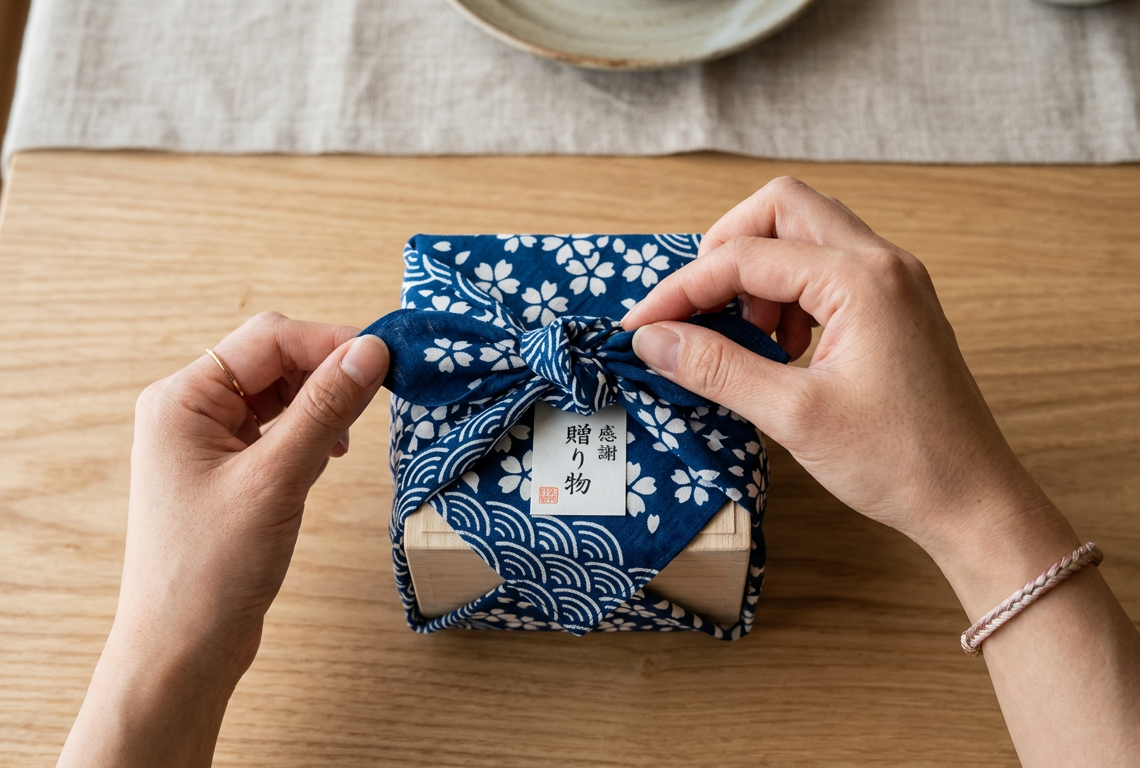
I was watching a documentary the other night about modern Japan, and something caught my attention. A young woman in her early twenties was carefully wrapping a gift. Not with the usual tape and scissors, but with a square of fabric, folding it with these precise, deliberate movements I’d only ever seen my grandmother do. I didn’t think much of it until I started noticing it everywhere. A barista with a small bonsai tree on the counter, talking to it like a pet. A shopkeeper wearing a kimono jacket over jeans, the kind of casual mixing that would have seemed disrespectful a generation ago. A group of teenagers in a…
-
A Godzilla Fan’s Adventure
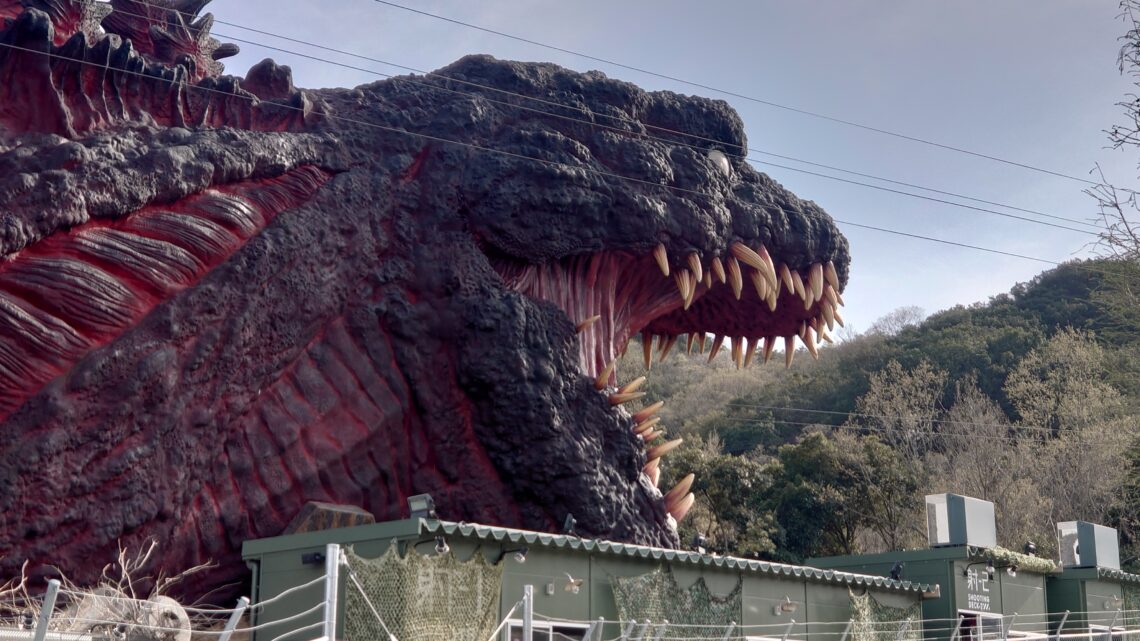
My April 2023 trip also lead me to Awaji Island led me straight into the jaws of Shin Godzilla—literally. As part of the island’s Nijigen-no-Mori park, the Godzilla zipline experience has a unique charm that combines adventure with nostalgia. Walking up to the enormous replica of Shin Godzilla was surreal. Its sheer size against the tranquil island backdrop was impressive, and I couldn’t help but pause to take it all in before gearing up for the zipline. The zipline itself was exhilarating. Flying through the air, heading directly toward Godzilla’s mouth, is as strange as it sounds, but there’s something oddly satisfying about it. The sensation of speeding toward a…
Exploring Japanese Culture