-
Discovering the Katana at Hiroshima Castle
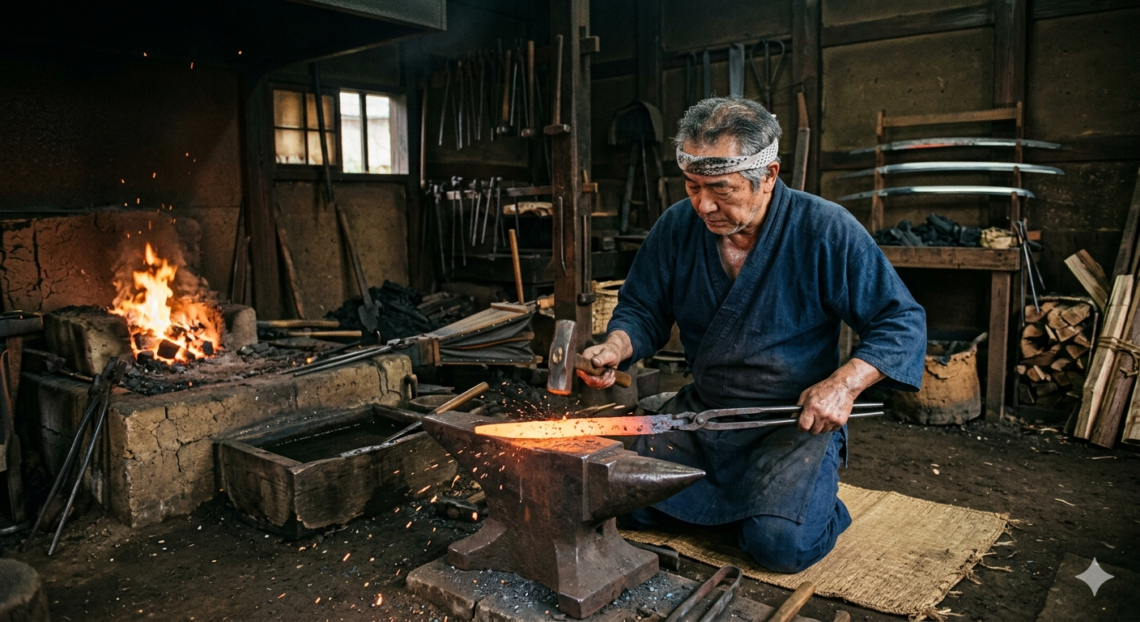
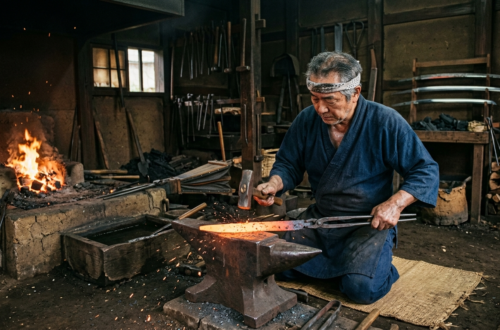
During my Kansai travels in 2025, I visited Hiroshima Castle and found myself spending far more time than expected in a room full of swords. Most castles display a blade or two, but Hiroshima’s collection was different. There were more Japanese swords on display here than in any other castle museum I had visited, each one carefully mounted and lit to highlight the subtle curve of the blade and the distinctive wave of the temper line. The experience was made more memorable by an interactive display that invited visitors to hold a replica katana feeling the weight and balance of a weapon that once defined an entire warrior class left…
-
The 7% Secret: How Tax Law Created Japan’s Grapefruit Alcohol Boom
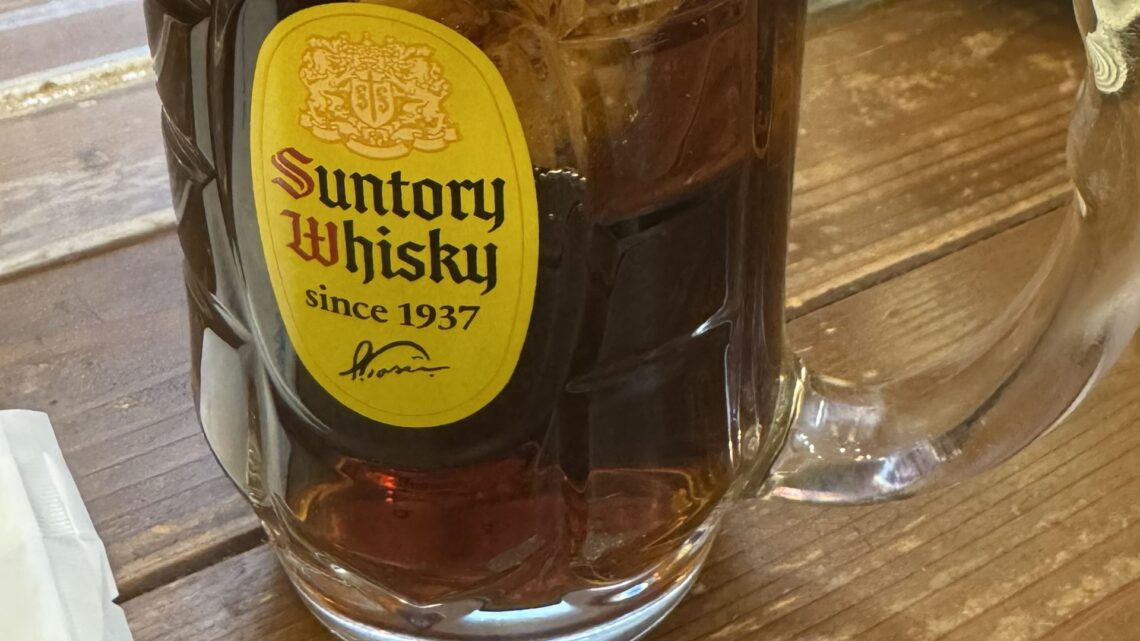
Walk into any Japanese convenience store and you’ll see a wall of colorful cans: grapefruit chu‑hai, energy‑drink cocktails, and carbonated Highballs, most clocking in at exactly 5–7% ABV. These neatly packaged drinks account for over 60% of Japan’s alcohol market, yet few realize their existence hinges on a clever tax structure. What looks like a casual beverage aisle is actually the product of a century‑old tax system that shaped an entire drinking culture. Japan’s alcohol tax is levied by malt percentage and type. Beer (≥67% malt) pays the highest rate (~¥240/L), while “happoshu” (low‑malt sparkling alcohol, ≤25% malt) and certain shochu‑based RTDs face much lower duties (~¥150/L). To stay in…
-
Castles Made of Wood
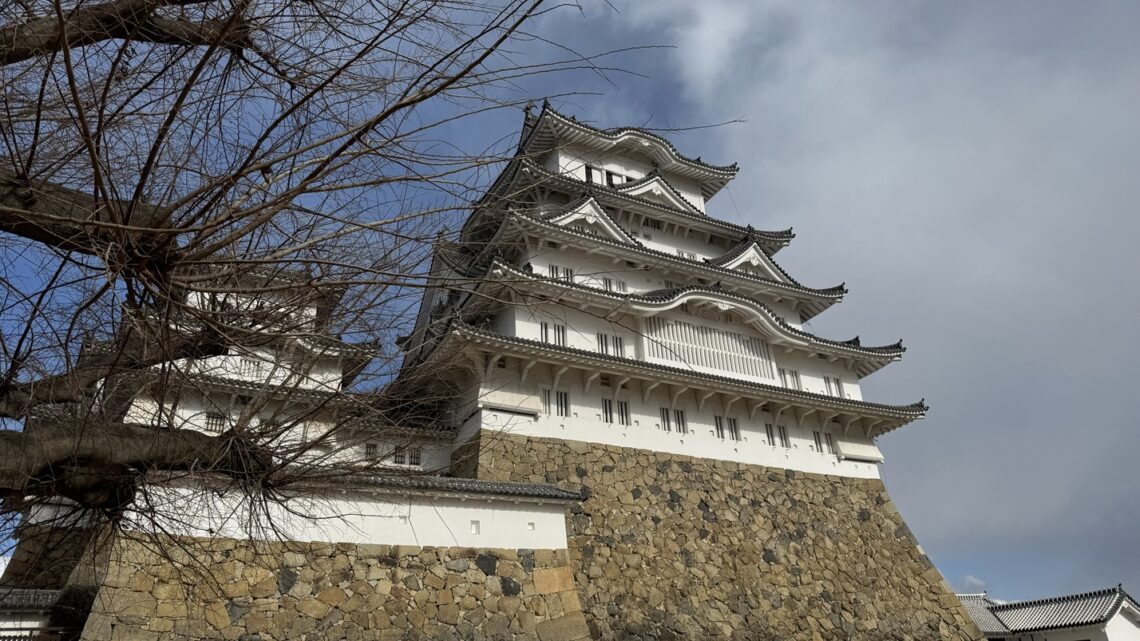
I’ve always been fascinated by the beauty of Japanese castles. In 2025, I finally got to see them for myself. Three in one trip — Hiroshima, Osaka, and Himeji. Each one felt different, but they all shared something I hadn’t expected. They didn’t look like fortresses. They looked like something out of a story. The first thing that struck me was the material. European castles are stone. Massive, solid, built to take a beating. Japanese castles sit on stone foundations — huge granite blocks fitted together without mortar — but everything above that is wood. Wood. In a country that has earthquakes. And typhoons. And fires. It seemed like a…
-
The Deer I Almost Met
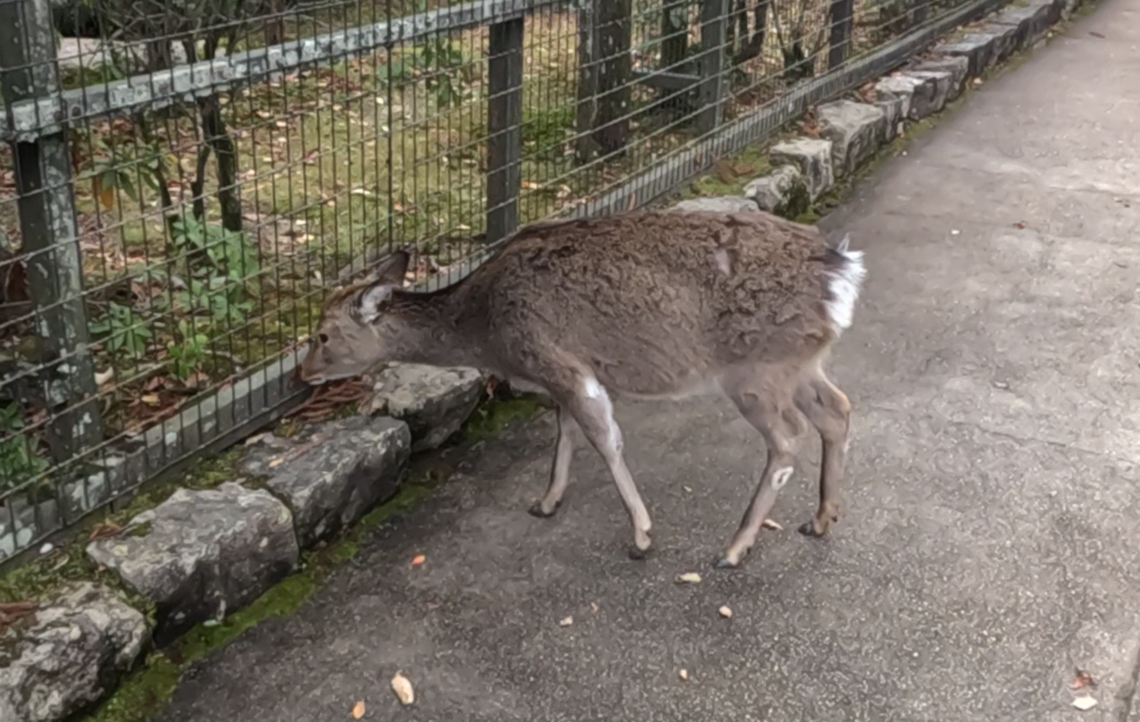
The deer on Itsukushima don’t bow. I found that out on my first day in Japan, standing near the torii gate as three of them walked past me like I wasn’t there. One glanced my way, decided I wasn’t interesting, and kept going. No crackers. No performance. Just deer, moving through. You see them all over the island. Near the shops, on the paths, by the temples. The younger ones come closer, a few meters away, but never close enough to touch. They watch, gauge, decide. There’s something earned about that distance. Later, walking near Nara Park, I saw something I wasn’t expecting. A poster showing a white deer with…
-
The Gate Between Worlds: Japan’s Torii
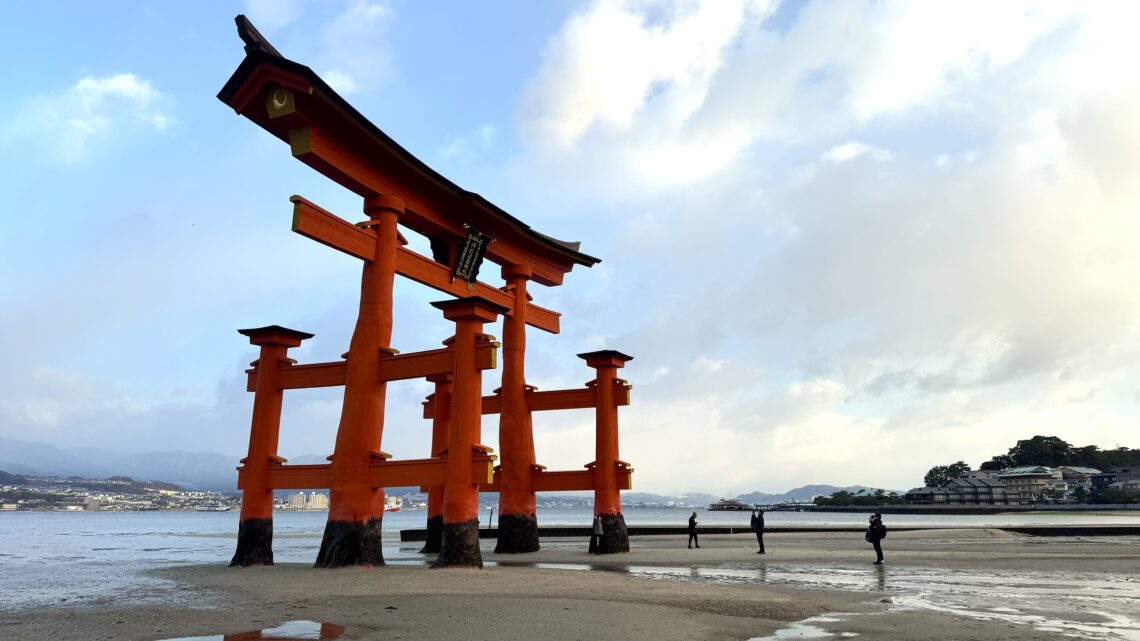
Standing before the floating torii at Itsukushima in January 2025, I watched the vermilion gate rise from the tide like a threshold between what we know and what we don’t. No other structure in Japan marks the sacred so simply — two posts, a lintel, a tie-beam. Yet this unadorned frame carries weight that temples and castles cannot. Torii have stood at shrine entrances since at least 922 AD, though their roots may stretch further. The oldest surviving stone torii dates to the 12th century at a Hachiman shrine in Yamagata Prefecture; the oldest wooden example is from 1535 at Kubō Hachiman Shrine in Yamanashi. Scholars believe their origins trace…
-
Japan’s Hidden Spirit World: How Yōkai Became Part of Everyday Life
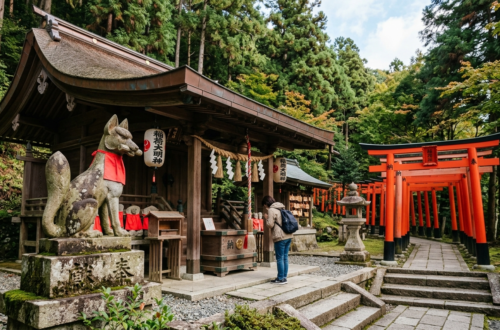
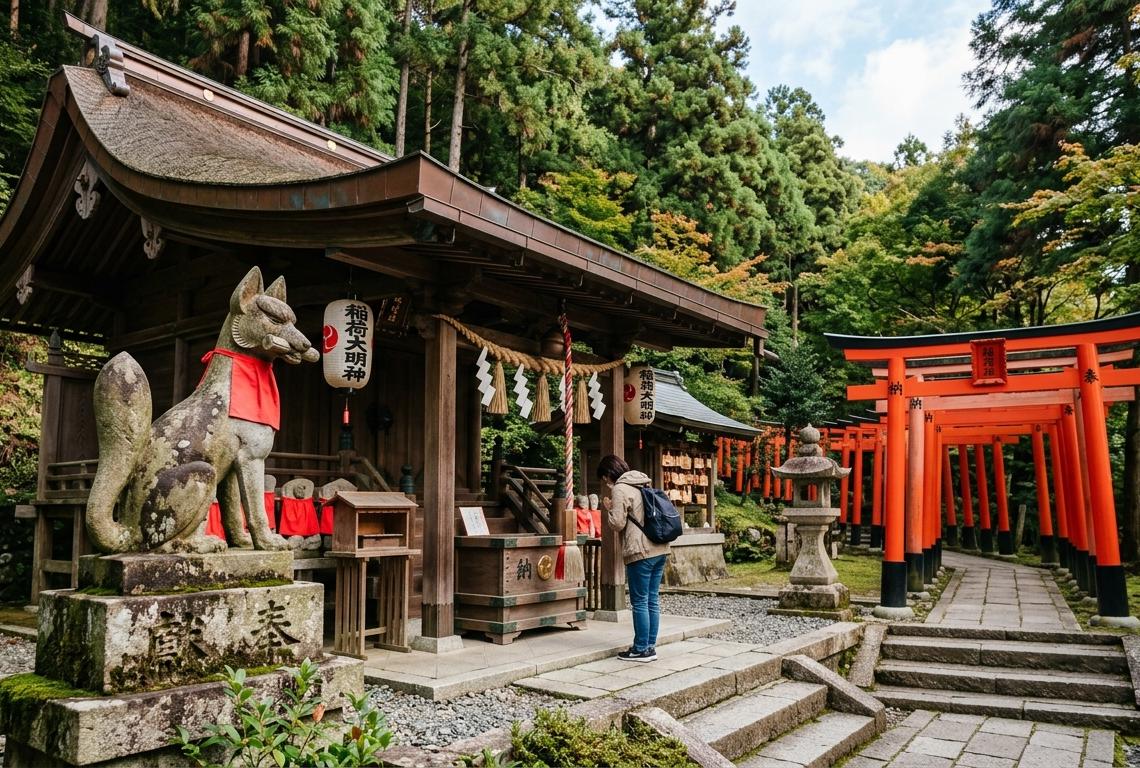
The first time I really noticed yokai, I was in Japan standing in front of a row of fox statues. I’d seen them before — those stone foxes you find at shrines, usually in pairs, mouths open or closed depending on what you’re supposed to believe. On this particular visit I actually stopped and looked at them properly. They were everywhere. Not just at one shrine — at Inari shrines, at random intersections, at places that looked like they’d been there forever. And the thing that caught me was how casual everyone was being about it. People walked past, touched them, threw coins at them, prayed to them. Nobody was…
-
Two Cows, Two Stories: What a Decade-Old Souvenir Taught Me About Japan
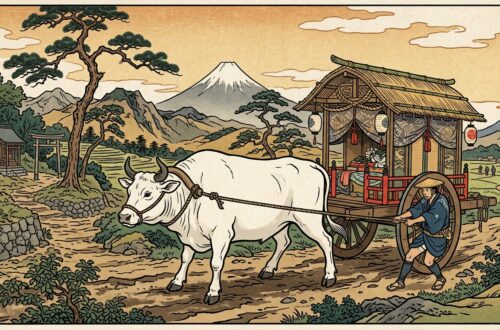
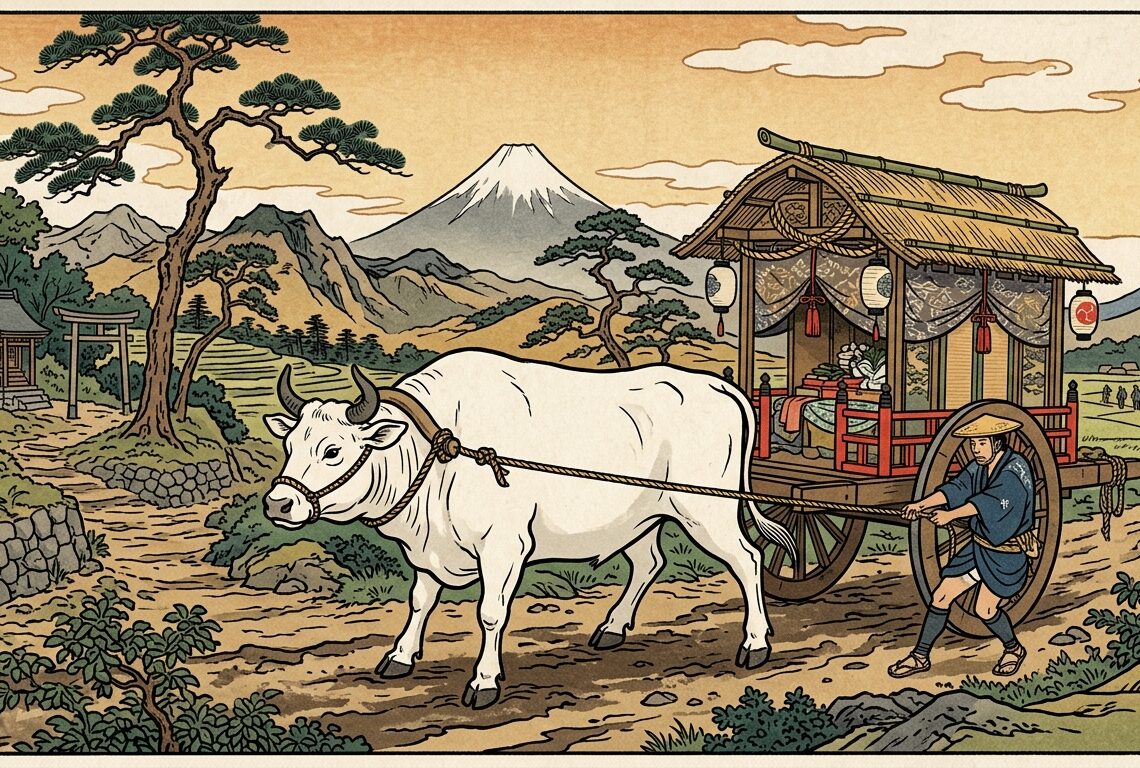
The white ox—blessed at Dazaifu Tenmangu shrine I was digging through a box of old travel mementos the other day when I found them again—two small cow figurines I bought in Japan over a decade ago. One white, one black. At the time, I didn’t think much about them beyond “these look nice.” But finding them again made me curious. Why cows? Why these two? So I started digging. The white one, I now know, came from Dazaifu Tenmangu—a shrine in Fukuoka I’d visited on that trip. It’s a sacred place, famous for its ox statues scattered throughout the grounds. The legend says an ox stopped pulling a funeral cart…
-
Hara Hachi Bu: The 80% Rule from Japan’s Longevity Islands
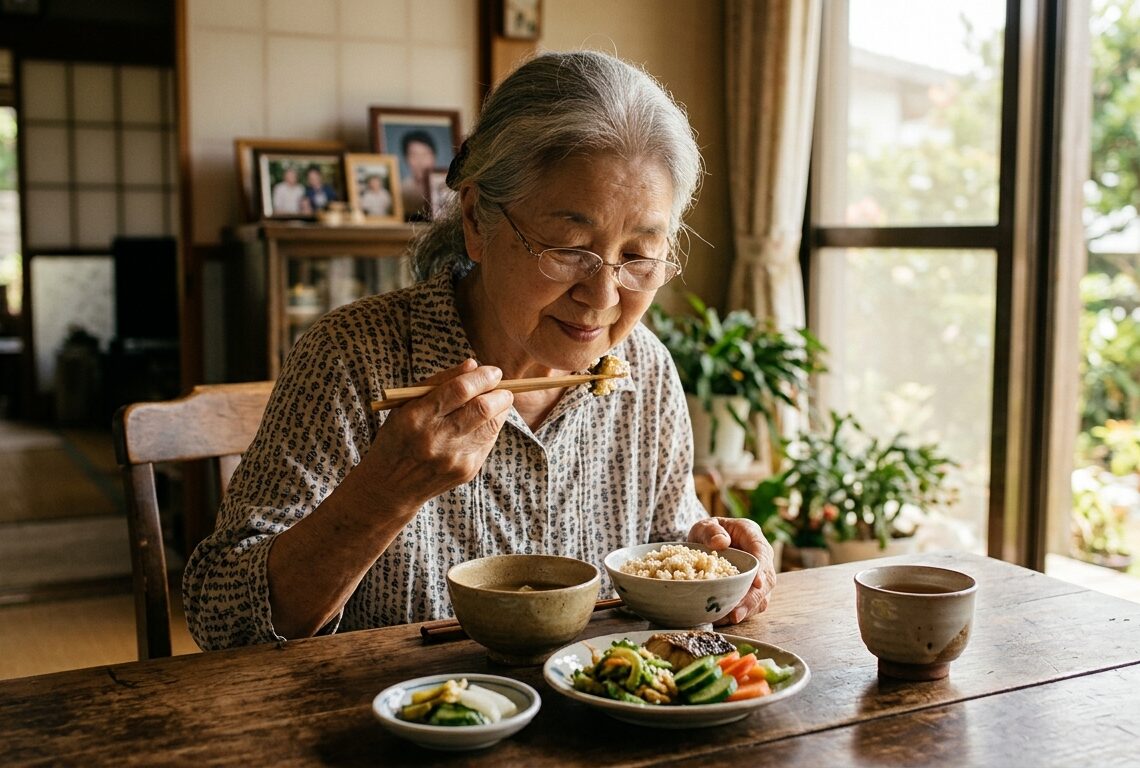
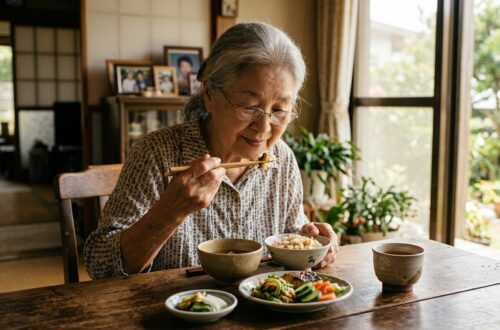
I was reading about Okinawa the other day—those islands south of mainland Japan where people routinely live past 100—and kept seeing the same phrase pop up. “Hara hachi bu.” Stomach eight parts full. Eat until you’re 80% full, then stop. It’s not about leaving food behind or wasting anything. Japanese culture values “mottainai” too deeply for that. Hara Hachi Bu is about knowing when to stop before you hit that stuffed, sluggish feeling. You serve appropriate portions, eat slowly and mindfully, and recognize the moment when you’re satisfied but not heavy. The brain takes 20 minutes to register fullness, so stopping at 80% means you end up perfectly content—not hungry,…
-
Washoku: Why Japan’s Young Generation is Rediscovering Traditional Food
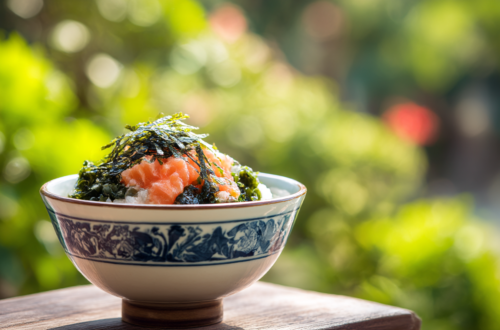
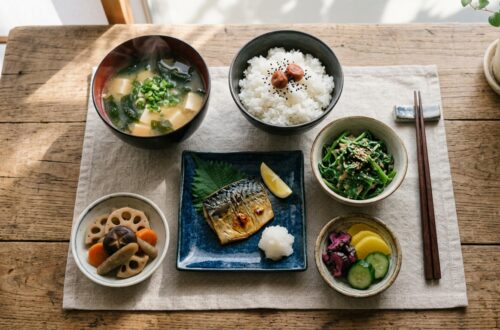
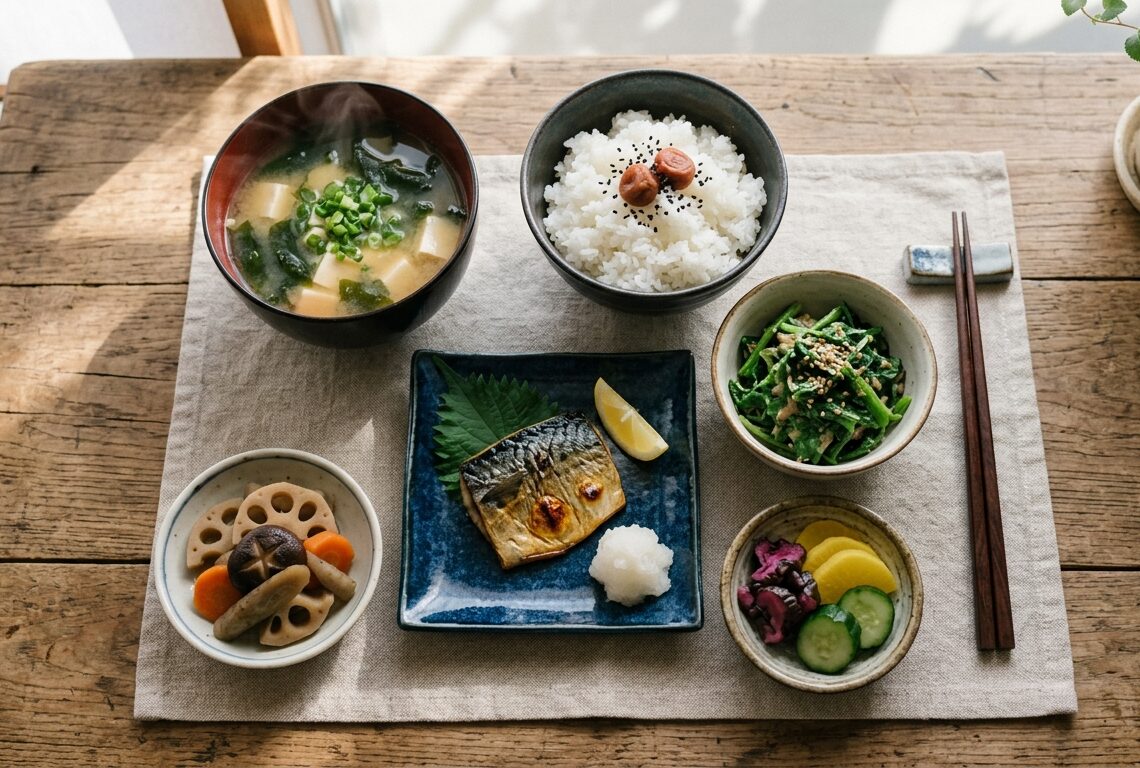
I was browsing a Japanese cookbook in a bookstore last week, admiring the beautiful photography, when something struck me. These intricate dishes—following the “one soup, three sides” structure, presented on seasonal tableware—felt completely foreign to me. Not in a bad way, but in a way that made me realize how little I knew about a cuisine I’d only experienced in restaurants. In 2013, UNESCO recognized Washoku—Japan’s traditional dietary culture—as an Intangible Cultural Heritage. It emphasizes fresh, seasonal ingredients at their peak (shun), nutritional balance, and artistic presentation. The “Wa” in Washoku means harmony—promoting bonds among family and community through shared meals. But here’s the paradox: while the world celebrates Washoku,…
-
The New Traditionalists
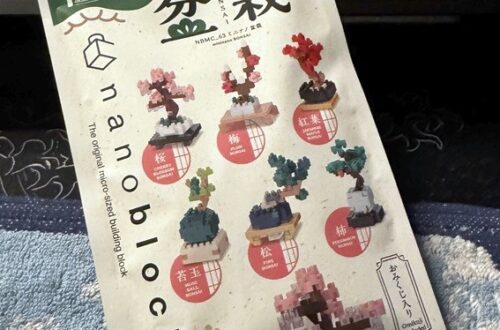
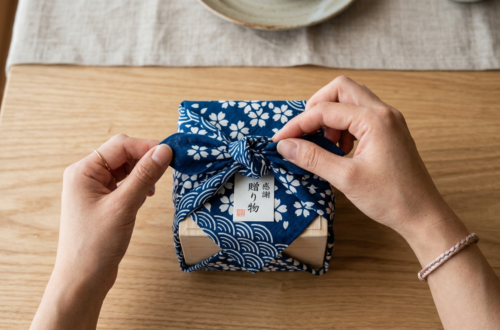
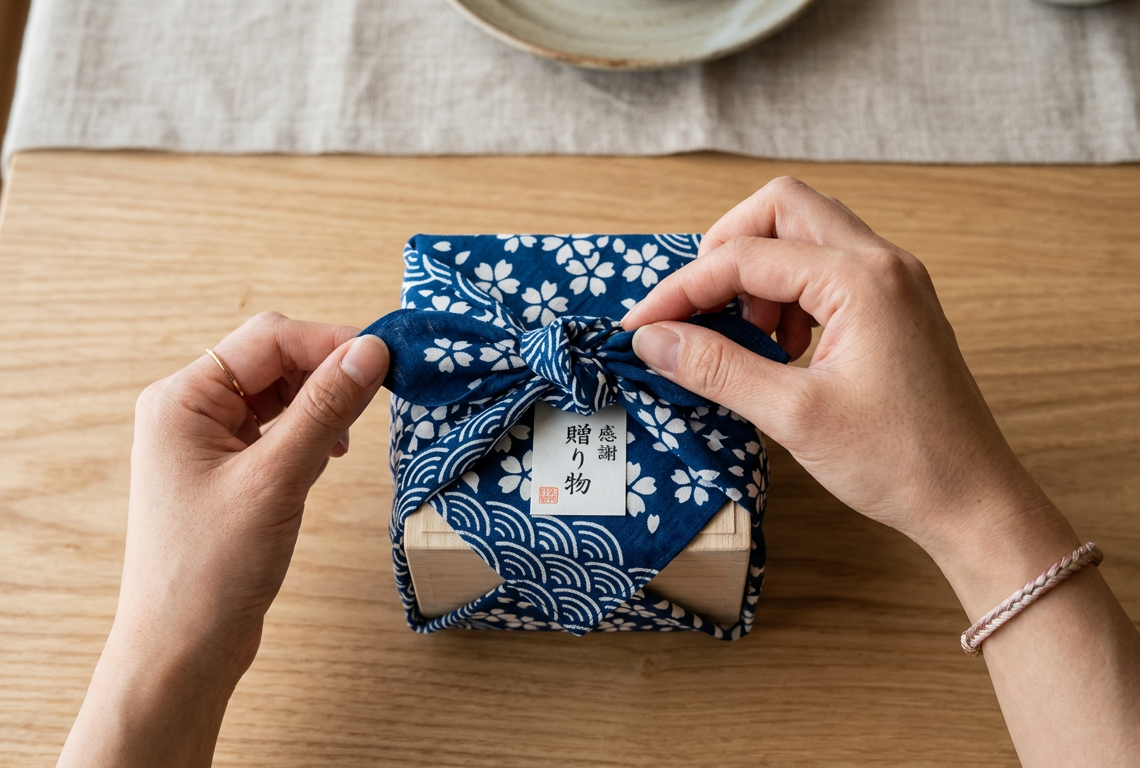
I was watching a documentary the other night about modern Japan, and something caught my attention. A young woman in her early twenties was carefully wrapping a gift. Not with the usual tape and scissors, but with a square of fabric, folding it with these precise, deliberate movements I’d only ever seen my grandmother do. I didn’t think much of it until I started noticing it everywhere. A barista with a small bonsai tree on the counter, talking to it like a pet. A shopkeeper wearing a kimono jacket over jeans, the kind of casual mixing that would have seemed disrespectful a generation ago. A group of teenagers in a…

Exploring Japanese Culture