Discovering the Katana at Hiroshima Castle
During my Kansai travels in 2025, I visited Hiroshima Castle and found myself spending far more time than expected in a room full of swords. Most castles display a blade or two, but Hiroshima’s collection was different. There were more Japanese swords on display here than in any other castle museum I had visited, each one carefully mounted and lit to highlight the subtle curve of the blade and the distinctive wave of the temper line. The experience was made more memorable by an interactive display that invited visitors to hold a replica katana feeling the weight and balance of a weapon that once defined an entire warrior class left a far deeper impression than any textbook description ever could.
What struck me most was how the katana’s story is inseparable from the history of Japan itself. For over 700 years, from the Kamakura period through the Sengoku era, the sword evolved alongside the nation from battlefield necessity to symbol of power after the Battle of Sekigahara in 1600, and eventually to a refined art object during the peaceful Edo period. Legendary figures like Miyamoto Musashi and the 47 Ronin cemented the katana’s place in Japanese mythology, turning steel and technique into something approaching legend. Yet beneath the romance lies a harder truth: much of what we call bushido the ethical code of the samurai was formalised mainly in the Meiji era, long after the sword had ceased to be a primary weapon. The katana, it seems, was as much a philosophy as a blade.
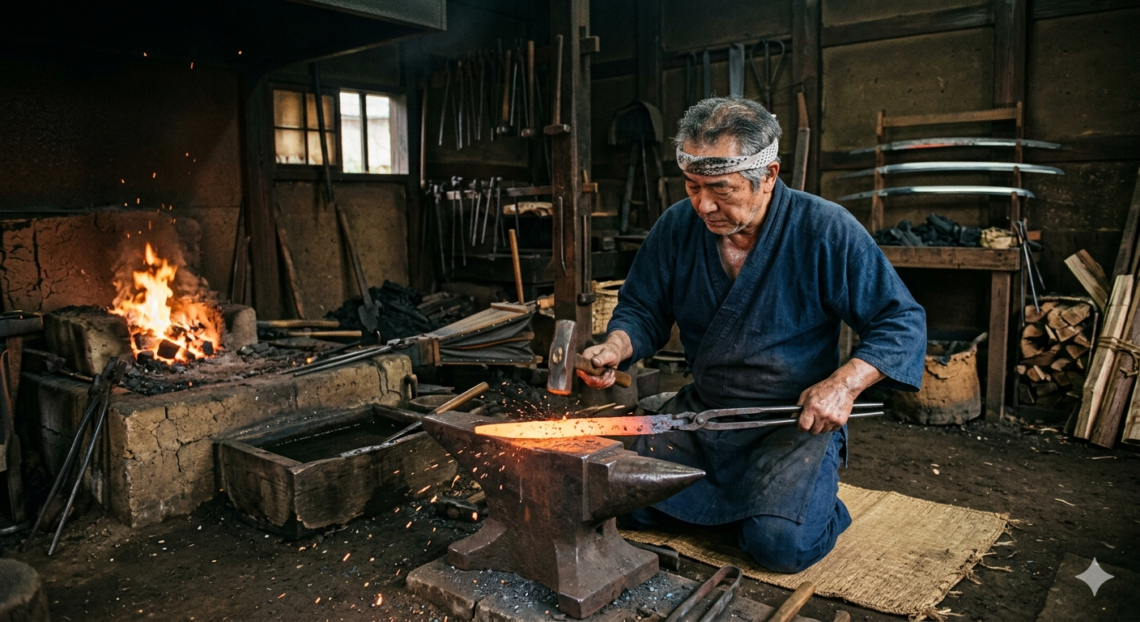
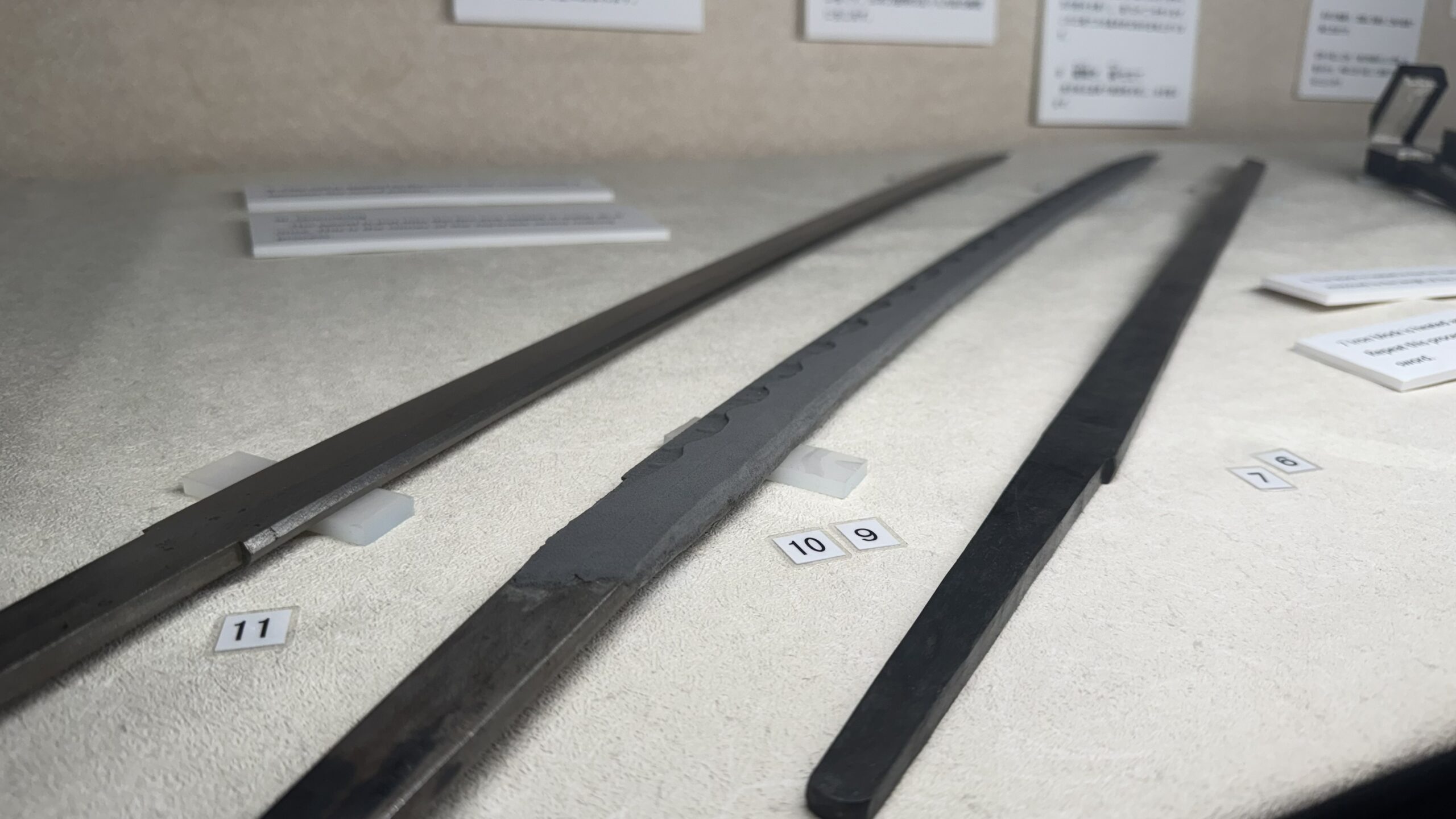
The forging of a katana was itself a discipline bordering on the spiritual. The process began with tamahagane a high-carbon steel produced by smelting iron sand in a traditional tatara furnace. The steel was then folded ten to twenty times, layer upon layer, to remove impurities and create a dense, resilient core. What followed was perhaps the most critical step: differential hardening, where clay was painted onto the blade’s spine before quenching in water. This caused the edge to cool faster than the spine, creating the iconic hamon that wavy, shimmering temper line unique to each blade. Polishing, which could take days, brought out the full beauty of the steel. The result: a blade roughly 60 to 73 centimetres long and weighing just over a kilogram, balanced for speed and precision.
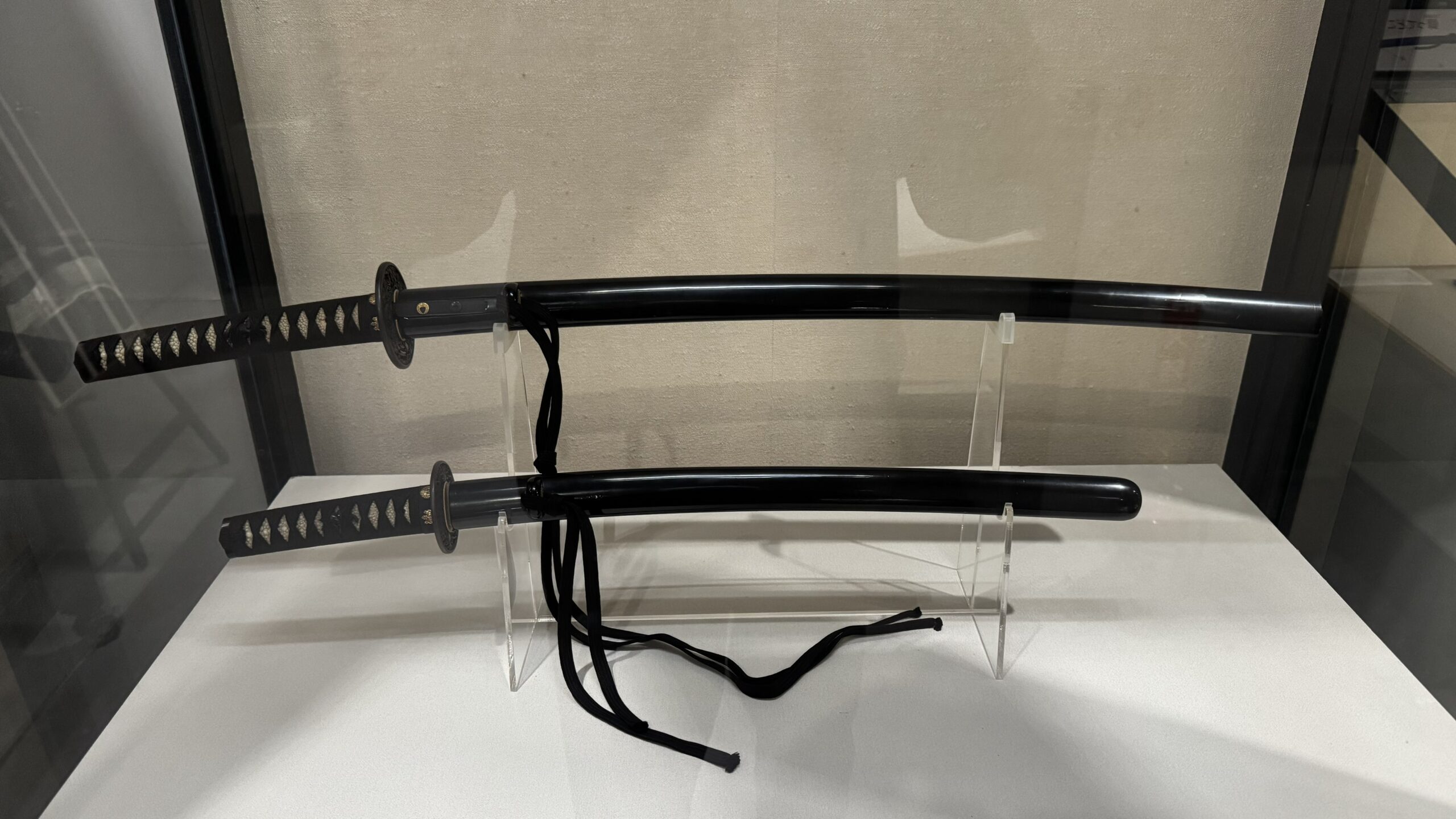
The katana that once decided battles now rests in museums and private collections preserved as a Cultural Property and guarded by living national treasures who continue the traditions of the forge. Hiroshima Castle, as the former seat of the Mori clan, holds a particular significance in this living legacy. To stand there, replica in hand, surrounded by blades that span centuries of craftsmanship, is to understand why this sword has endured: it is not merely a weapon, but a mirror held up to the soul of Japan.

You May Also Like
Two Cows, Two Stories: What a Decade-Old Souvenir Taught Me About Japan
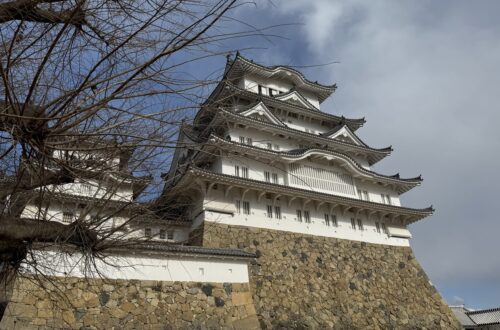
Castles Made of Wood