Japan’s Hidden Spirit World: How Yōkai Became Part of Everyday Life
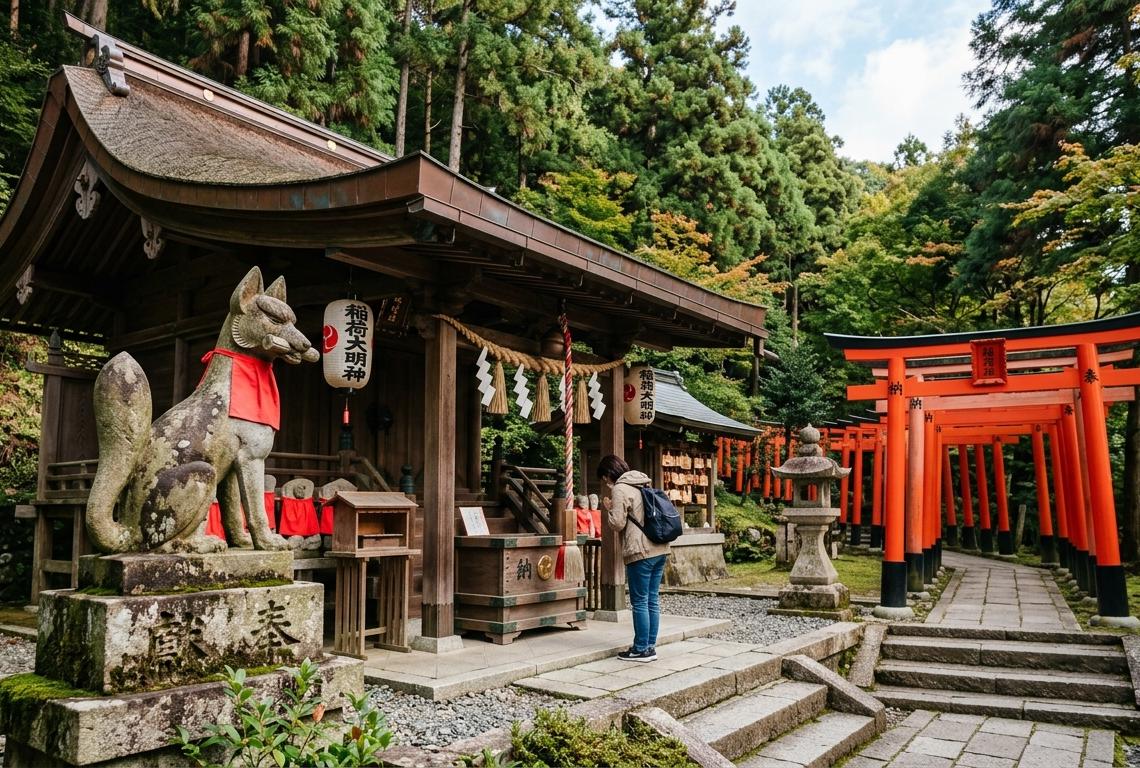
The first time I really noticed yokai, I was in Japan standing in front of a row of fox statues.
I’d seen them before — those stone foxes you find at shrines, usually in pairs, mouths open or closed depending on what you’re supposed to believe. On this particular visit I actually stopped and looked at them properly. They were everywhere. Not just at one shrine — at Inari shrines, at random intersections, at places that looked like they’d been there forever. And the thing that caught me was how casual everyone was being about it. People walked past, touched them, threw coins at them, prayed to them. Nobody was treating them like artifacts or curiosities. They were just… there. Part of the furniture.
I hadn’t thought about it since I was a kid, watching GeGeGe no Kitarō — an anime about a one-eyed spirit boy who helps humans and fights other yokai. I couldn’t remember the name for years, just had this image of a weird little ghost kid rattling around in my head. It wasn’t until I saw those fox statues in Japan that the two things clicked. The statues, the anime, the stories my Japanese friends mentioned casually — it was all the same world. It had never gone away. It was just sitting there, waiting for me to notice it was still alive.
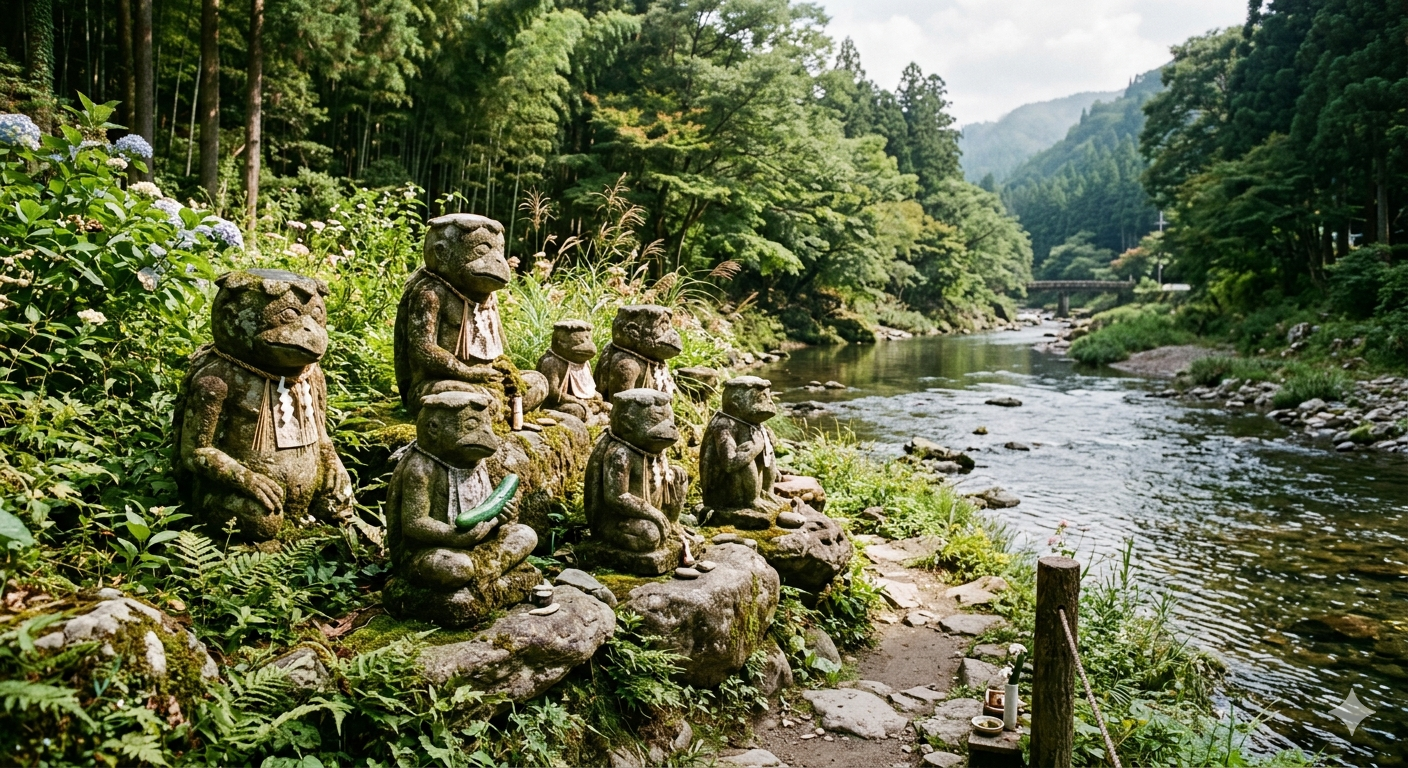
What surprised me most was how present it all still is. I thought yokai were something from old Japan — historical, finished, the Japanese version of Western fairy tales you grow out of. But the statues weren’t museum pieces. People were actively using them. The fox statues at Inari shrines are still part of active worship. And the yokai themselves are everywhere in modern Japanese media: Pokemon is built on them, Demon Slayer is literally yokai stories with a fresh coat of paint, Yo-kai Watch was created specifically to teach kids about them. GeGeGe no Kitarō itself — the show I watched as a kid — is based on a manga that’s been running since 1959. It’s one of the longest-running stories in Japanese media. These aren’t endangered folklore being preserved by academics. They’re still being used, still being invented, still showing up in new places.
The thing I keep coming back to is that nobody in Japan makes a big deal about it. There’s no “remembering our heritage” framing, no “preserving ancient traditions” energy. It’s just there. Like knowing a ghost story. Like the time I ordered a kappa-maki at a sushi restaurant and my Japanese friend laughed — because the joke was centuries old and I was finally in on it. That’s when I understood: yokai aren’t hidden in Japan. They’re not niche. They’re just part of how the place works, so normal that nobody thinks to explain them to you.


You May Also Like
A Tiny Cherry Blossom from Japan

Anime Fans! Initial D Sequal – MF Ghost